
Quick answer
Structured exercise during and after cancer treatment is safe for most patients, protects the heart against the long-term cardiovascular consequences of cancer therapy, and in stage III or high-risk stage II colon cancer now has phase 3 randomised evidence of a survival benefit on a par with many systemic therapies [1]. The minimum effective prescription is at least 150 minutes per week of moderate aerobic exercise plus two to three resistance sessions per week, sustained over years [2,3]. In Australia, patients can access up to five Medicare-subsidised allied health sessions per calendar year through a GP Chronic Condition Management Plan with referral to an Accredited Exercise Physiologist.
Why fitness matters in cancer
Cancer therapy and cardiovascular health are tightly linked. Anthracyclines, HER2-targeted antibodies, immune checkpoint inhibitors, several tyrosine kinase inhibitors, and radiation involving the chest all carry cardiovascular risk. Cancer treatment also drives a sharp and often persistent decline in cardiorespiratory fitness.
That decline matters. Cardiorespiratory fitness, measured as peak oxygen uptake (VO₂peak), is one of the strongest predictors of survival in any adult population. A pooled analysis in Annals of Oncology found a 20 percent reduction in cancer mortality with intermediate fitness and a 45 percent reduction with high fitness, compared with the lowest fitness category, independent of body composition [4]. Around 44 percent of women who complete anthracycline plus trastuzumab therapy for HER2-positive breast cancer fall below the threshold considered necessary for functional independence [5].
The CHALLENGE trial: exercise as cancer therapy
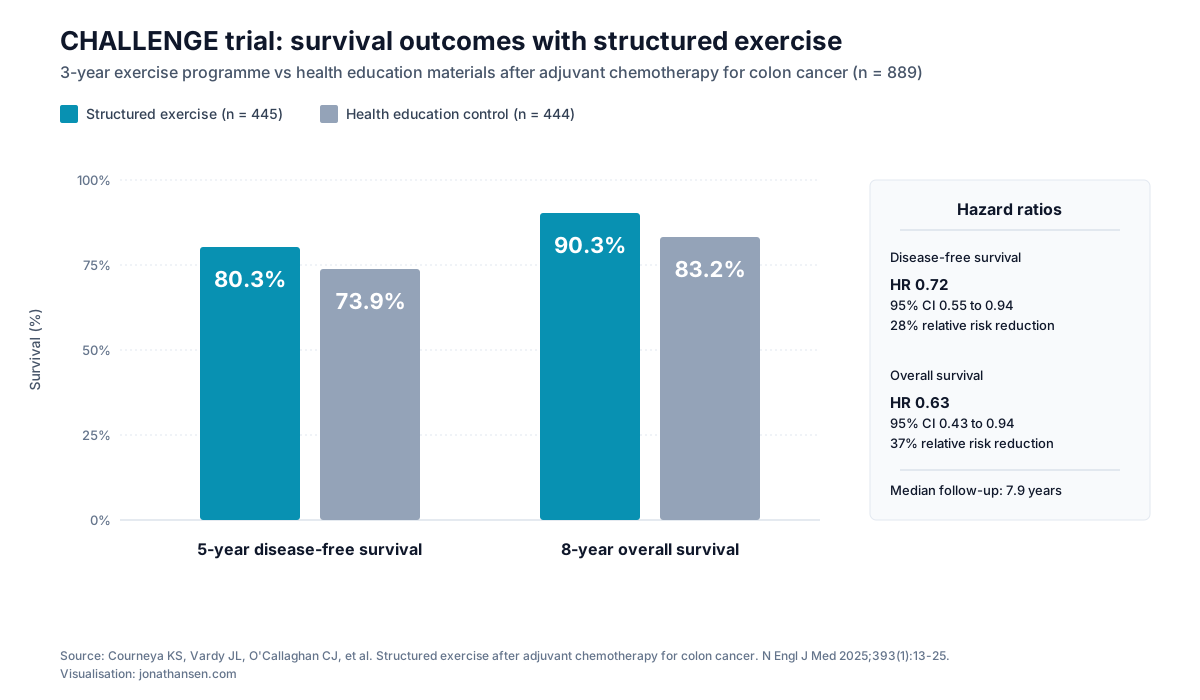
In June 2025 the New England Journal of Medicine published the CHALLENGE trial, a phase 3 study led by the Canadian Cancer Trials Group with Australian co-investigators at the University of Sydney [1]. 889 patients with stage III or high-risk stage II colon cancer who had completed adjuvant chemotherapy were randomised to a three-year structured exercise programme or to standard health-education materials. All received standard cancer surveillance.
After a median follow-up of 7.9 years:
- Risk of cancer recurrence, new primary cancer, or death fell by 28 percent (HR 0.72, 95% CI 0.55 to 0.94)
- Five-year disease-free survival was 80.3 percent versus 73.9 percent
- Risk of death from any cause fell by 37 percent (HR 0.63, 95% CI 0.43 to 0.94)
- Eight-year overall survival was 90.3 percent versus 83.2 percent
The magnitude of benefit is comparable to, and in some cases exceeds, the benefit added by adjuvant chemotherapy itself in the same patient population.
The exercise prescription was practical: an additional 10 MET-hours per week of moderate-intensity aerobic activity above each participant’s baseline, equivalent to around two and a half hours of brisk walking per week. Participants met fortnightly with a physical activity consultant for the first year and monthly thereafter. Musculoskeletal complaints were more common in the exercise group (18.5 percent versus 11.5 percent) but generally manageable.
Cardioprotection during active cancer treatment
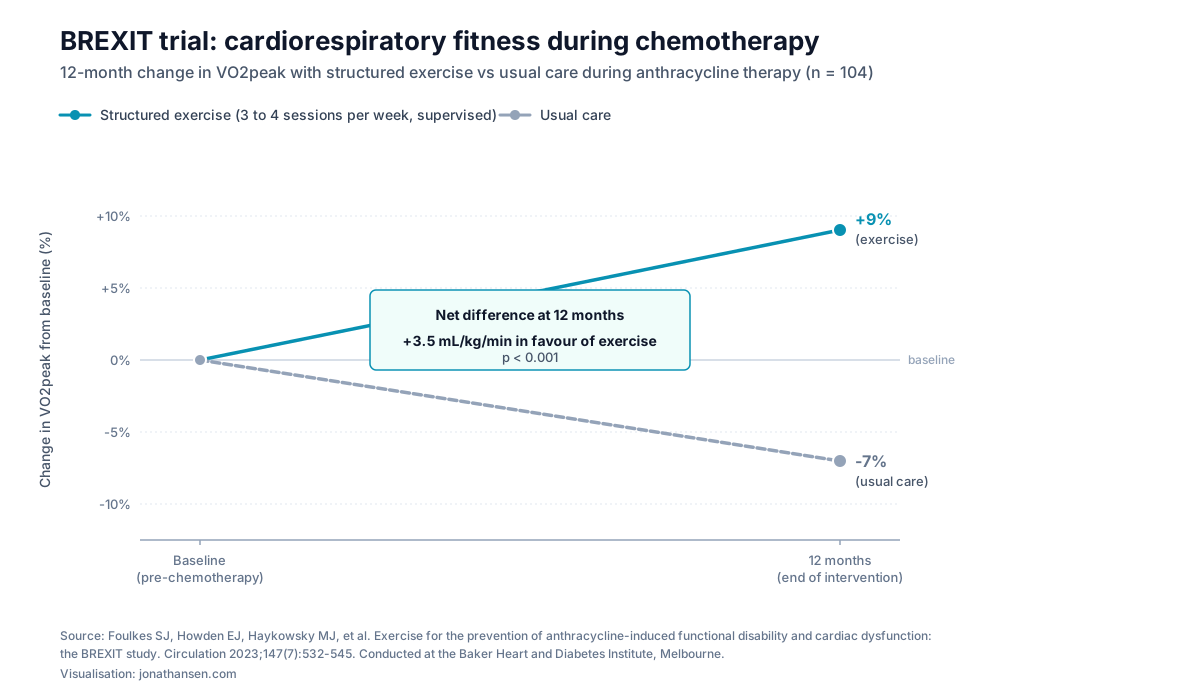
The BREXIT trial, conducted at the Baker Heart and Diabetes Institute in Melbourne, randomised 104 women with early-stage breast cancer scheduled for anthracycline chemotherapy to 12 months of supervised aerobic and resistance training (three to four days per week) or to usual care [6]. At 12 months, the usual-care group had lost approximately 7 percent of their VO₂peak; the exercise group had gained around 9 percent. The between-group difference was 3.5 mL/kg/min in favour of exercise (p < 0.001).
Effects on resting left ventricular ejection fraction during anthracycline therapy have been modest in trials so far, which is unsurprising given how late ejection fraction declines as a marker of injury. The cardioprotective story is about preserving cardiorespiratory reserve and skeletal muscle function, which together determine functional capacity, symptoms, and downstream cardiovascular events.
The 2022 European Society of Cardiology Guidelines on Cardio-Oncology endorse physical activity as part of cardiovascular risk modification at all phases of the cancer journey [7].
What kind of exercise actually works
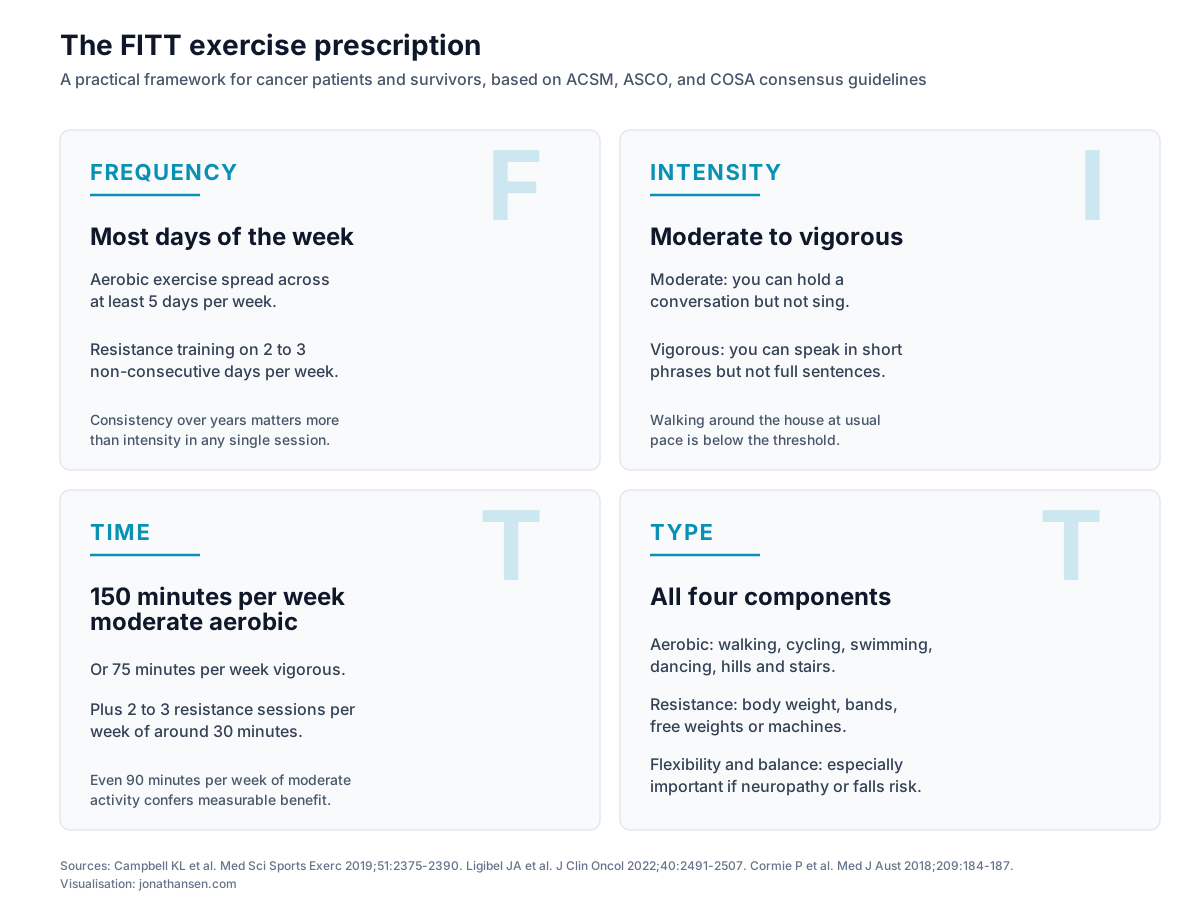
Daily incidental movement around the house is better than sitting still but does not produce the cardiovascular and oncological benefits described above. The minimum effective prescription, consistent across the 2019 American College of Sports Medicine roundtable [2,3], the 2022 ASCO guideline [8], and the 2018 Clinical Oncology Society of Australia (COSA) position statement [9], has four components.
Aerobic exercise. At least 150 minutes per week of moderate intensity, or 75 minutes of vigorous, spread across most days. At moderate intensity you can hold a conversation but not sing comfortably; at vigorous intensity you can speak only in short phrases. Walking, cycling, swimming, and dancing all qualify.
Resistance training. Two to three sessions per week, working the major muscle groups (legs, hips, chest, back, shoulders, arms). This is the component most often neglected and the most important for patients on therapies that erode muscle and bone. Australian work by the Galvao group at Edith Cowan University showed in a randomised trial that combined resistance and aerobic training reverses muscle loss in men receiving androgen deprivation therapy for prostate cancer [10]. Similar principles apply to women on aromatase inhibitors and to anyone on prolonged corticosteroids.
Flexibility and balance. Particularly relevant for older patients, those with chemotherapy-induced peripheral neuropathy, and those on therapies affecting bone health, where falls are a meaningful risk.
The single most important variable is consistency. The CHALLENGE result was driven by sustained behavioural change over three years, not by any individual session.
Safety and when to flag concerns
Exercise is safe for most cancer patients and survivors. The 2019 ACSM roundtable concluded that exercise is generally safe, with medical clearance advised in specific situations rather than as a routine requirement [2]. Fatigue is not a contraindication; exercise reduces cancer-related fatigue [2,3]. The Australian Adult Pre-Exercise Screening System (APSS), developed jointly by Exercise and Sports Science Australia, Sports Medicine Australia, and AUSactive, is the standard pre-screening tool [11].
Seek medical review before starting if:
- New or unexplained chest pain, exertional breathlessness disproportionate to deconditioning, or pre-syncope or syncope
- Known or suspected cardiomyopathy, recent myocardial infarction, severe valvular disease, or uncontrolled arrhythmia
- Active or suspected immune checkpoint inhibitor myocarditis, anthracycline cardiotoxicity, or other cancer therapy-related cardiac dysfunction
- Significant anaemia, severe thrombocytopenia, or active systemic infection
- Known bone metastases (resistance and impact loading should be modified, but exercise is not contraindicated)
- Severe peripheral neuropathy affecting balance
- Recent surgery (timing follows surgical advice)
Stop and seek review if:
New chest pain, palpitations with light-headedness, unusual breathlessness for the level of exertion, syncope, new lower-limb swelling, or a sudden unexplained drop in exercise tolerance. These warrant cardiac assessment, not deconditioning.
The historical advice to avoid upper-body resistance training in women with breast cancer-related lymphoedema has been overturned. Progressive supervised resistance training has been shown not to worsen swelling and to reduce both the incidence of exacerbations and symptom severity in randomised trials [12].
The Australian pathway
From 1 July 2025, the previous GP Management Plan and Team Care Arrangements were consolidated into the GP Chronic Condition Management Plan (GPCCMP). A patient with a chronic medical condition, which includes cancer, can be referred for up to five Medicare-rebated allied health sessions per calendar year [13].
The appropriate referral is to an Accredited Exercise Physiologist (AEP): a four-year university-trained allied health professional registered with Exercise and Sports Science Australia, with specific competencies in chronic disease. Several AEPs hold additional cancer-specific accreditation. Physiotherapists with cancer experience are an alternative recognised by COSA [9]. Personal trainers and gym instructors are not qualified for cancer-specific exercise prescription.
The practical request to the GP: a GP Chronic Condition Management Plan with referral to an AEP with cancer experience. The five sessions are usually enough to establish an individualised programme that the patient continues independently or with periodic review. AEP and physiotherapy sessions are often covered by private health insurance extras cover.
Exercising without equipment or a gym
Walking is the gold standard aerobic exercise for this population. There is no equipment that produces better outcomes than a brisk walk performed at a pace that feels like work. Hills, stairs, and intervals (alternating faster and recovery periods) increase intensity without requiring anything new. Cycling, swimming, and dancing are valid alternatives.
For resistance training, body weight is sufficient to start. A simple home programme covering the major muscle groups: sit-to-stand from a chair (or squats), wall or knee push-ups, glute bridges, step-ups using a sturdy step, and rows performed using a resistance band hooked through a closed door. Bands cost under twenty dollars and last for years. Two or three sessions per week, with each exercise performed for two to three sets of eight to fifteen repetitions, covers the prescription.
Chair-based exercises are an appropriate starting point for older patients or those with significant deconditioning. Heart Foundation Walking groups operate across Australia and are free to join. Cancer Council Australia and Cancer Australia both publish free patient-facing exercise resources.
The role of cardio-oncology
Exercise is a core part of the cardio-oncology consultation, not an afterthought. The 2022 ESC Guidelines on Cardio-Oncology position physical activity alongside pharmacological cardioprotection, blood pressure and lipid management, and cardiovascular risk factor modification as a primary intervention across the cancer journey [7]. In practice, a cardio-oncology consultation typically includes:
- Baseline cardiovascular risk stratification before high cardiotoxicity-risk regimens (high cumulative-dose anthracyclines, anthracycline plus trastuzumab, certain combinations involving chest radiation, conditioning regimens for allogeneic bone marrow transplant), with particular attention to pre-existing cardiovascular disease or accumulated risk factors
- An individualised exercise prescription, framed in the same FITT terms above, calibrated to the cancer regimen, current cardiovascular status, baseline fitness, and treatment phase
- Direct referral to an Accredited Exercise Physiologist with cancer experience, with handover of the relevant cardiac information so that the programme can be tailored rather than generic
- Investigation and management of new cardiac symptoms during or after treatment, including reduction in exercise tolerance disproportionate to expected deconditioning, and of surveillance findings suggesting cancer therapy-related cardiac dysfunction (a fall in left ventricular ejection fraction, decline in global longitudinal strain, or rise in cardiac biomarkers)
- Long-term follow-up of cancer survivors with new exertional symptoms years after treatment, where deconditioning and late cardiovascular complications can coexist and need to be disentangled
The role of cardio-oncology is to actively prescribe exercise, integrate it with pharmacological cardioprotection where indicated, coordinate with the AEP so the programme is appropriately calibrated, and follow the patient over time so that the prescription evolves with the cardiovascular and oncological trajectory. Cardio-oncology is to clarify any cardiovascular issues that need attention, optimise risk factor management, and coordinate with the AEP so that the programme is tailored rather than withheld.
Frequently asked questions
Is it safe to exercise during chemotherapy? For most patients, yes. ACSM, ASCO, and COSA guidelines all support exercise during active cancer treatment [2,8,9]. Specific situations (uncontrolled cardiac disease, severe anaemia or thrombocytopenia, active infection, recent surgery, bone metastases) warrant medical review before starting or escalating.
How much exercise is enough? At least 150 minutes per week of moderate aerobic exercise plus two to three resistance sessions per week is the consensus minimum [2,3,8,9]. The CHALLENGE trial used a target of 10 MET-hours per week (around 2.5 hours of brisk walking) sustained over three years and demonstrated a survival benefit at this dose [1].
Does walking around the house count? Light incidental movement is better than sitting still but does not replicate the dose used in the trials. The threshold is moderate intensity, defined practically as walking briskly enough that you can talk but not sing comfortably.
What is an Accredited Exercise Physiologist? A four-year university-trained allied health professional registered with Exercise and Sports Science Australia, with specific competencies in prescribing exercise for chronic medical conditions including cancer.
How do I access subsidised exercise support in Australia? Ask your GP for a GP Chronic Condition Management Plan (formerly the GP Management Plan) and a referral to an AEP with cancer experience. This provides up to five Medicare-rebated sessions per calendar year [13].
Does exercise reduce cancer recurrence? The CHALLENGE trial (NEJM 2025) showed that a three-year structured exercise programme after adjuvant chemotherapy for stage III or high-risk stage II colon cancer reduced the risk of recurrence, new primary cancer, or death by 28 percent and reduced overall mortality by 37 percent compared with health education alone [1]. Evidence in other cancer types is supportive but not yet at the same level of randomised confirmation.
Can I exercise without a gym? Yes. Walking outdoors is the most evidence-based aerobic exercise for this population. Resistance training can be done at home using body weight and a single resistance band.
When should I see a cardiologist before exercising? Patients with new chest pain or breathlessness, known or suspected cardiomyopathy, valvular disease, uncontrolled arrhythmia, or established cancer therapy-related cardiac dysfunction should see a cardiologist (ideally with cardio-oncology expertise) before starting or significantly escalating an exercise programme.
References
- Courneya KS, Vardy JL, O’Callaghan CJ, et al. Structured exercise after adjuvant chemotherapy for colon cancer. N Engl J Med 2025;393(1):13-25. doi:10.1056/NEJMoa2502760
- Schmitz KH, Campbell AM, Stuiver MM, et al. Exercise is medicine in oncology: engaging clinicians to help patients move through cancer. CA Cancer J Clin 2019;69(6):468-484. doi:10.3322/caac.21579
- Campbell KL, Winters-Stone KM, Wiskemann J, et al. Exercise guidelines for cancer survivors: consensus statement from international multidisciplinary roundtable. Med Sci Sports Exerc 2019;51(11):2375-2390. doi:10.1249/MSS.0000000000002116
- Schmid D, Leitzmann MF. Cardiorespiratory fitness as predictor of cancer mortality: a systematic review and meta-analysis. Ann Oncol 2015;26(2):272-278. doi:10.1093/annonc/mdu250
- Foulkes SJ, Costello BT, Howden EJ, et al. Clinical, echocardiographic, and biomarker associations with impaired cardiorespiratory fitness early after HER2-targeted breast cancer therapy. JACC CardioOncol 2021;3(5):691-700. doi:10.1016/j.jaccao.2021.09.014
- Foulkes SJ, Howden EJ, Haykowsky MJ, et al. Exercise for the prevention of anthracycline-induced functional disability and cardiac dysfunction: the BREXIT study. Circulation 2023;147(7):532-545. doi:10.1161/CIRCULATIONAHA.122.062814
- Lyon AR, Lopez-Fernandez T, Couch LS, et al. 2022 ESC Guidelines on cardio-oncology developed in collaboration with the European Hematology Association, the European Society for Therapeutic Radiology and Oncology, and the International Cardio-Oncology Society. Eur Heart J 2022;43(41):4229-4361. doi:10.1093/eurheartj/ehac244
- Ligibel JA, Bohlke K, May AM, et al. Exercise, diet, and weight management during cancer treatment: ASCO guideline. J Clin Oncol 2022;40(22):2491-2507. doi:10.1200/JCO.22.00687
- Cormie P, Atkinson M, Bucci L, et al. Clinical Oncology Society of Australia position statement on exercise in cancer care. Med J Aust 2018;209(4):184-187. doi:10.5694/mja18.00199
- Galvao DA, Taaffe DR, Spry N, Joseph D, Newton RU. Combined resistance and aerobic exercise program reverses muscle loss in men undergoing androgen suppression therapy for prostate cancer without bone metastases: a randomized controlled trial. J Clin Oncol 2010;28(2):340-347. doi:10.1200/JCO.2008.21.4072
- Norton K, Norton L. Pre-exercise screening: guide to the Australian Adult Pre-Exercise Screening System (APSS), 2nd Edition. Exercise and Sports Science Australia, Sports Medicine Australia, AUSactive; 2019 (updated 2025). https://ausactive.org.au/wp-content/uploads/2025/08/Pre-exercise-screening-ebook-4-Mb.pdf
- Schmitz KH, Ahmed RL, Troxel A, et al. Weight lifting in women with breast-cancer-related lymphedema. N Engl J Med 2009;361(7):664-673. doi:10.1056/NEJMoa0810118
- Services Australia. Allied health and other primary health care referrals for GP chronic condition management plans. Updated 2025. Available at: servicesaustralia.gov.au
- Vasbinder A, Catalan T, Anderson E, et al. Cardiovascular risk stratification of patients undergoing hematopoietic stem cell transplantation: the CARE-BMT risk score. J Am Heart Assoc 2024;13(1):e033599. doi:10.1161/JAHA.123.033599
How to cite this article: Sen J. Exercise during and after cancer treatment: an evidence-based guide. jonathansen.com. Published 24 April 2026. Available at: jonathansen.com/blog/exercise-during-and-after-cancer-treatment
The information in this article is general in nature and does not replace individualised medical advice. Patients are encouraged to discuss any exercise programme with their treating team, particularly in the context of active cancer treatment or known cardiovascular disease.